Breaking the Build-First Cycle
Multinational technology corporation
Industry
Technology
Service
Software Product Design and Development
Summary
-

4-12 weeks for user feedback → Days
Time to first user feedback, cut from up to 12 weeks to early prototypes.
-
Dozens of concepts from one prompt
Engineers generated dozens of low-fidelity interface variations from a single prompt in one workshop.
-
1 new product management role
The client created a dedicated product management role to own discovery and prioritization.
Overview
As a multinational technology corporation, the client knew how to build powerful, sophisticated software. But knowing what to build was another story. At its AI experimentation platform, engineering teams could turn complex requirements into working software, yet product decisions often moved forward before anyone had validated what users actually needed. By the time feedback arrived, teams could already have invested weeks of development in the wrong direction.
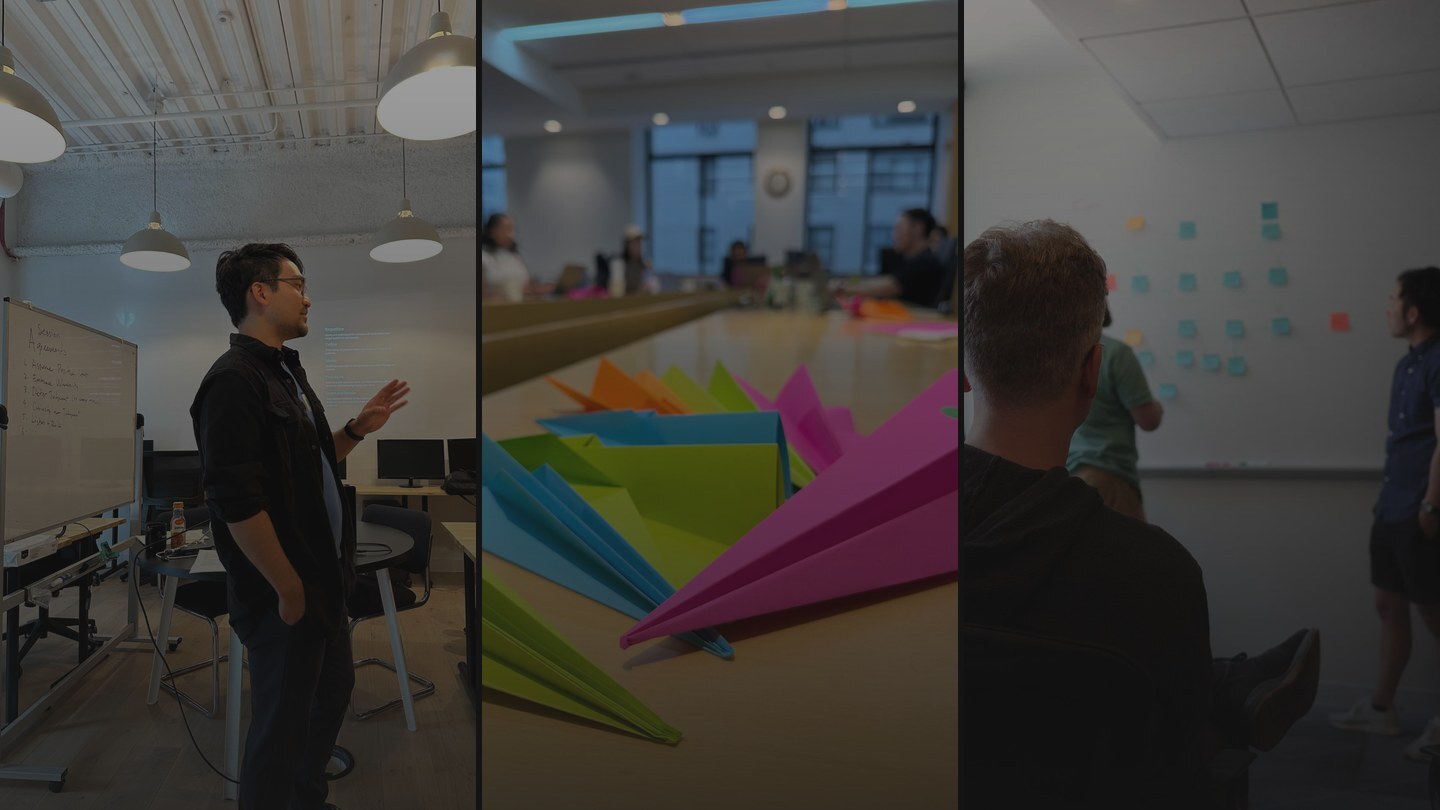
Working as an embedded partner, 8th Light helped bring user research, collaborative discovery, and AI-assisted prototyping into the development process. What began as a different way to explore ideas gradually became a different way of working, with engineers independently testing concepts, product teams grounding priorities in user needs, and stakeholders aligning earlier on what was worth building.
8th Light helped us turn what we knew about our users into an actionable roadmap. We could prioritize based on effort and impact instead of guessing.
— Product Manager, multinational technology corporation
The AllCampus Journey, In Brief
The Challenge
Engineering was moving faster than feedback.
The client's engineering-led culture was a major strength. Teams were comfortable tackling technically ambitious problems, and leadership had deep experience in engineering and data science. But that expertise also shaped product decisions, with direction often coming from engineering leadership and limited opportunities to validate assumptions against real user needs.
Without dedicated ownership of discovery and prioritization, engineers could spend up to twelve weeks planning and implementing a feature before receiving meaningful feedback. Design reviews sometimes happened only after code was complete and approaching deployment, when discovering a misunderstood requirement or usability problem could mean substantial rework, delayed releases, or canceled launches.
Generative AI introduced another complication. As engineers became faster at producing working code, the gap between implementation speed and product validation threatened to grow even wider. The organization didn't need to become less engineering-driven; it needed a more reliable way to ensure its engineering effort was going toward the right problems.
The Solution
Bringing discovery into the development process
Rather than arriving with a prescribed transformation plan, 8th Light worked alongside client engineers to introduce discovery practices through the product decisions and development work already underway. Our team interviewed users, shared unfinished concepts, facilitated collaborative mapping sessions, and brought early prototypes into technical discussions. This made it possible to challenge assumptions while ideas were still taking shape, rather than waiting until features were complete.
One of the first opportunities was helping the organization see its product through the eyes of its users. Knowledge about the platform was scattered across engineering teams, stakeholders, and users, and not all of it was visible to product leadership. Through user journey mapping, 8th Light brought those perspectives together, revealing workflows and pain points that could inform a more intentional prioritization approach.
With a shared understanding of the user experience, product and engineering teams could connect potential improvements to real needs and evaluate opportunities by effort and impact. Decisions that previously relied heavily on internal assumptions now had a stronger foundation in user evidence.
User journey mapping helped us bring our knowledge together, turn it into an actionable roadmap, and prioritize based on effort & impact. We can plan strategically instead of guessing.
— Product Manager, multinational technology corporation
Using AI to explore ideas before building them
The client's engineers were already enthusiastic about generative AI as a way to accelerate development, so 8th Light introduced another application: using AI to explore and validate ideas before committing to implementation.
In a hands-on workshop, engineers used identical prompts across tools including Claude and Gemini to generate dozens of low-fidelity interface concepts. Rather than selecting the first plausible solution and moving directly into development, participants could compare different interpretations of the same problem, challenge assumptions, and identify gaps while changes were still inexpensive.
Keeping the prototypes deliberately rough was part of the strategy. Simple interfaces with placeholder content encouraged conversations about functionality and user workflows rather than visual polish. The exercise also challenged the assumption that prototyping required specialized design expertise, making early experimentation more accessible to the people who would ultimately build the software.
One Product Manager, who initially believed they needed to know Figma to create a prototype, went on to build a working concept independently. The process surfaced unanswered questions that hadn't been apparent in written requirements and made it easier for leadership to understand the proposed functionality.
By making ideas tangible earlier, prototyping helped teams think more thoroughly about what they intended to build while reducing the effort required to communicate and evaluate different approaches.
It saved a lot of time on back-and-forth with leadership; they understood the plan and alignment was quicker.
— Product Manager, multinational technology corporation
The Impact
Better product decisions without losing engineering momentum
The most meaningful outcome of the engagement wasn't a single prototype, new framework, or redesigned interface. It was a change in how the organization approached product decisions, with discovery becoming part of everyday development rather than an activity reserved for individual projects.
User interviews and research began informing roadmap planning, while a dedicated product management role created clearer ownership of prioritization and closer collaboration with engineering. AI-assisted prototyping gave teams a practical way to explore ideas, identify unanswered questions, and build alignment before committing substantial development effort.
Perhaps most importantly, these practices began spreading beyond 8th Light's immediate involvement. Client engineers independently experimented with prototypes and sought early feedback, demonstrating that discovery had become useful enough to adopt on their own. Technical conversations also began shifting away from how to implement a requested feature and toward understanding the problem it was intended to solve.
The organization retained its engineering strengths while developing a more intentional way to apply them. Teams were better equipped to evaluate opportunities, align around user needs, and adapt their direction as new information emerged.
The Technical Deep Dive
Using AI to accelerate learning, not just implementation
Traditional development workflows can move directly from requirements into implementation, with meaningful validation happening only after code is written. 8th Light helped introduce a different approach that brought exploration, prototyping, and feedback earlier in the process.
Before: Requirement → Implementation → Review → Late feedback → Rework
With continuous discovery: Problem → AI-assisted exploration → Prototype → Feedback → Technical direction → Implementation → Iteration
AI-assisted exploration made it possible to generate and compare multiple interface concepts quickly, revealing different assumptions about workflows, information hierarchy, and user behavior. Low-fidelity prototyping kept early feedback focused on the underlying experience, allowing teams to test essential interactions without investing heavily in visual refinement.
The work also extended beyond interface design. Through collaborative system mapping, 8th Light helped make architectural requirements, dependencies, and system boundaries visible across engineering teams and stakeholders. This gave teams a way to evaluate proposed experiences against the broader technical environment, reducing the risk of pursuing solutions that seemed reasonable in isolation but failed to account for the platform's complexity.
By enabling engineers and product stakeholders to prototype directly in source code, the approach brought discovery closer to implementation. People who understood the product and its technical constraints could explore ideas themselves, gather feedback, and refine their direction before committing to production development.
Together, these practices created a feedback loop that complemented the organization's engineering expertise. AI could still accelerate implementation, but it could also help teams explore alternatives, challenge assumptions, and make better decisions before writing production code.
Let's Talk
Move fast on the right problems.
AI can shorten the distance between an idea and working software, but faster implementation creates value only when teams solve the right problems. 8th Light brings product, design, and engineering together to help technical teams explore earlier, validate sooner, and put their effort behind problems worth solving.
Related Content

Case Study
From Tacit Knowledge to Governed Delivery
AI Governance for EdTech
Education
Product Strategic Innovation Strategic Advisory AI Governance Software Delivery Advisory

Case Study
Vibrancy, Creativity, Accessibility, and Flexibility
Royal Academy of Arts
Education
Software Product Design and Development

Case Study
AI Unlocks Revenue-Driving Product Catalog Intelligence
Aspenware
TravelTech / E-Commerce
AI-Powered Data Infrastructure & Product Intelligence